- Home
- Fresh Produce Knowledge
- Produce Supply Chain
- Fresh Produce Consistency
Fresh produce Consistency
Fresh Produce Consistency
If there is one term that could be referred to as the fruit & vegetable retailers' mantra, then this is it. From field to shopping trolley, fresh produce consistency is one of the most vital factors in supply chain operations – but there is not nearly as much of it as there should be! It is also one of the most misunderstood concepts in business and often portrayed as a secondary goal - “Ah well, I might not be able to be top dog, but at least I am consistent, so that’s OK then.”
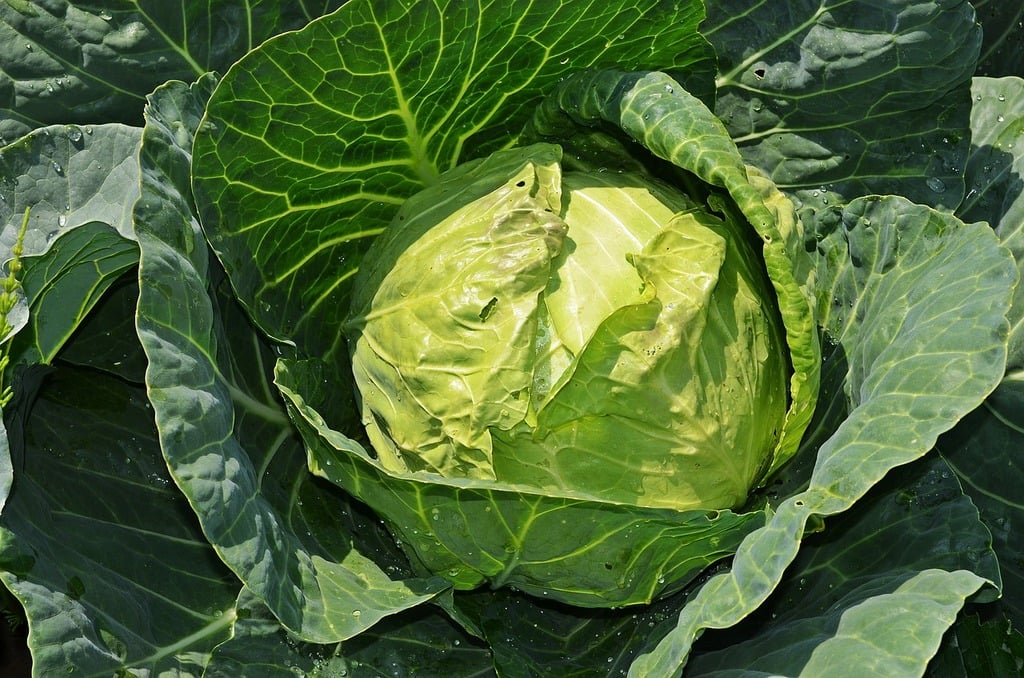
The reality is that consistency is a state aspired to, either consciously or subconsciously, by growers, service providers, retailers, and consumers alike – and half the time without even realising that everyone is after the same objective. There is nothing a grower hates more than a paddock full of cabbages with inconsistent growth patches in it. Considerable effort is expended these days to analyse the soil's nutritional profile for cultivating areas down to the last square metre and the wizards working for the fertiliser companies have become fairly competent in conjuring up a customised brew, capable of bringing even the most stubborn piece of cabbage real estate into line.
At harvest time, all these cabbages are expected to be standing in a straight file like a formation of soldiers at parade rest, ready to be inspected by a foreign head of state. Only in the case of our cabbages, the foreign component will most likely be a seasonal labourer imported from Tonga, the Fiji Islands, or Indonesia – and hopefully in possession of a valid work permit. Cutting cabbages - or cauliflower, lettuce, or broccoli for that matter - is a skilled task and an awful lot of damage can be inflicted through careless handling or inconsistent performance. At the other end of the spectrum sits the consumer, who has some quite specific expectations vis-a-vis consistency. Can we relate to this? Of course, we can! After all, we are consumers ourselves.
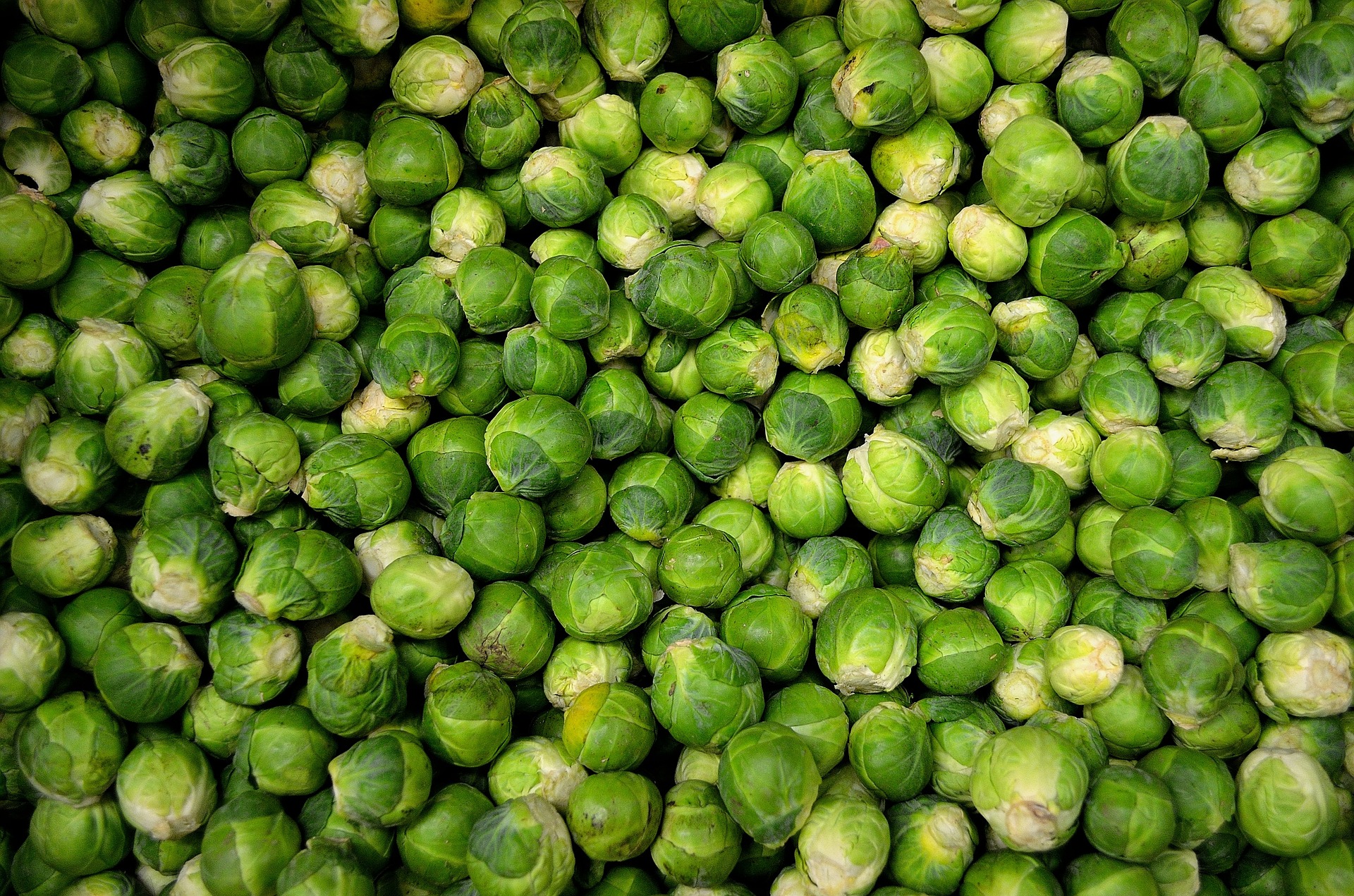
When I go and buy Brussels sprouts, I wish to select from a display of even-looking sprouts. I also have an expectation about the maximum diameter sprouts I would like to see on display and, as a Brussels sprout connoisseur, I naturally expect to be able to select from a line that was harvested after it has experienced the first frost, because that’s when Brussels sprouts taste sweeter. To top it all off, I have this expectation every time I feel like purchasing Brussels sprouts.
Consistency is thus a multidimensional phenomenon at consumer and product level, involving all the senses. Freshness, of course, is a given. I might not know how to define it, but I expect it. I do not treat other vegetables I like and buy any differently, by the way. I have the same high demand for uniformity – seasonally adjusted, of course, and product-specific.
It has taken me a long time to figure out what my perfect Brussels sprouts looks like and I would expect my requirements to be met every time, regardless of where I shop. This, of course, also applies to everything else I buy.
In the case of Brussels sprouts, we have a local idiosyncrasy here in New Zealand that illustrates my point beautifully. North Islanders prefer smaller-sized and closed bud sprouts from Ohakune. Our South Island brethren pull faces when presented with Ohakune Brussels sprouts and opt for baby cabbage-size specimens from Oamaru instead. This preference is so ingrained that Auckland retailers import Brussels sprouts from Australia when Ohakune product is short, as the Oamaru alternative would simply fail to sell.
Despite growers doing their utmost to achieve fresh produce consistency, and consumers expecting nothing less than the best in this area, there is unfortunately not enough consistency in the process that takes place after harvest and before the consumer lays their hands on the produce. There are big differences on how growers treat their produce after harvest. Some product has the field heat removed through rapid cooling and some does not get treated to that necessity. Some growers ensure their produce is travelling to market in refrigerated trucks with specially tuned suspensions. Others bounce their produce along on the back of their pickup trucks, gloriously unaware of the damage they are causing before the product even hits the packhouse.
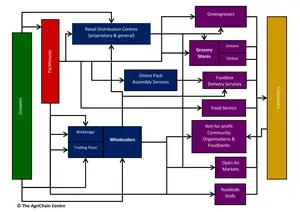
There are consistency deficits within the channels available to get the produce to the consumer and the produce is being treated, while travelling along those channels. The science community aims to address some of these under the umbrella expression, Supply Chain Optimisation.
The one thing that I, in my role as a consumer, will certainly not adjust is my expectation of fresh produce consistency.
Satisfying the consumer is easy. Just give them what they want. Do not expect them necessarily to be able to tell you what it is that they want, but be prepared to react once you have observed their behaviour.
You might like these
Produce Supply Chain
Effective fresh produce supply chain management is a complete wrap of skill, science and art.
Fresh Produce Supply Chain Structure
An observation about Fresh Produce Supply Chain Structure
Fresh Produce Middlemen
An introduction to the role of middlemen in the fresh produce supply chain.
Produce Retail Choice and Consequence
Where the changing face of produce retail choice and consequence is discussed.
Fresh Produce Economies of Scale
Economies of scale are critical in the fresh produce business, as commodity farm gate returns can fluctuate from one season to the next.