- Home
- Produce Or Horticulture Industry
- Fresh Produce Category Management
- Fact-based Produce Category Management
Fact-based produce category management
Fresh Produce Category Management Definition
As already discussed, the then US Produce Marketing Association (PMA, now IFPA), started to advocate "fact-based produce category management" in the mid nineteen nineties.
Given that category management was considered to be an evolutionary development that drew significantly from the procurement or buying function, the suggestion to introduce "fact-based produce category management", begs the question, "What did we have until PMA published its document in 1995?" Produce buying based on ficton? Surely not.
I, for one, do not subscribe to "fiction" being the correct antipode to "fact" within the context of fresh produce procurement in its widest sense.
Even buying at auction involved a few facts:
- Growers sent produce to auction where it could be bought.
- Quality assessment were based on the "what you see is what you get" principle.
- Produce buyers turned up to buy produce.
- Greengrocers and supermarket produce department offered their customer variety, choice to varying degrees of quality.
- Retailers and growers were kept apart from each other through the functionality of the wholesale and auction process and the fact that the produce typically travelled faster than any specific data, on the particular crop that was on the move, being available in a timely manner, if at all.
All facts, as far as I am concerned.
I prefer another expression when I am trying to differentiate between indisputable facts and related considerations, that may or may not be accurate but appear to b substituting for facts.
Let me explain.
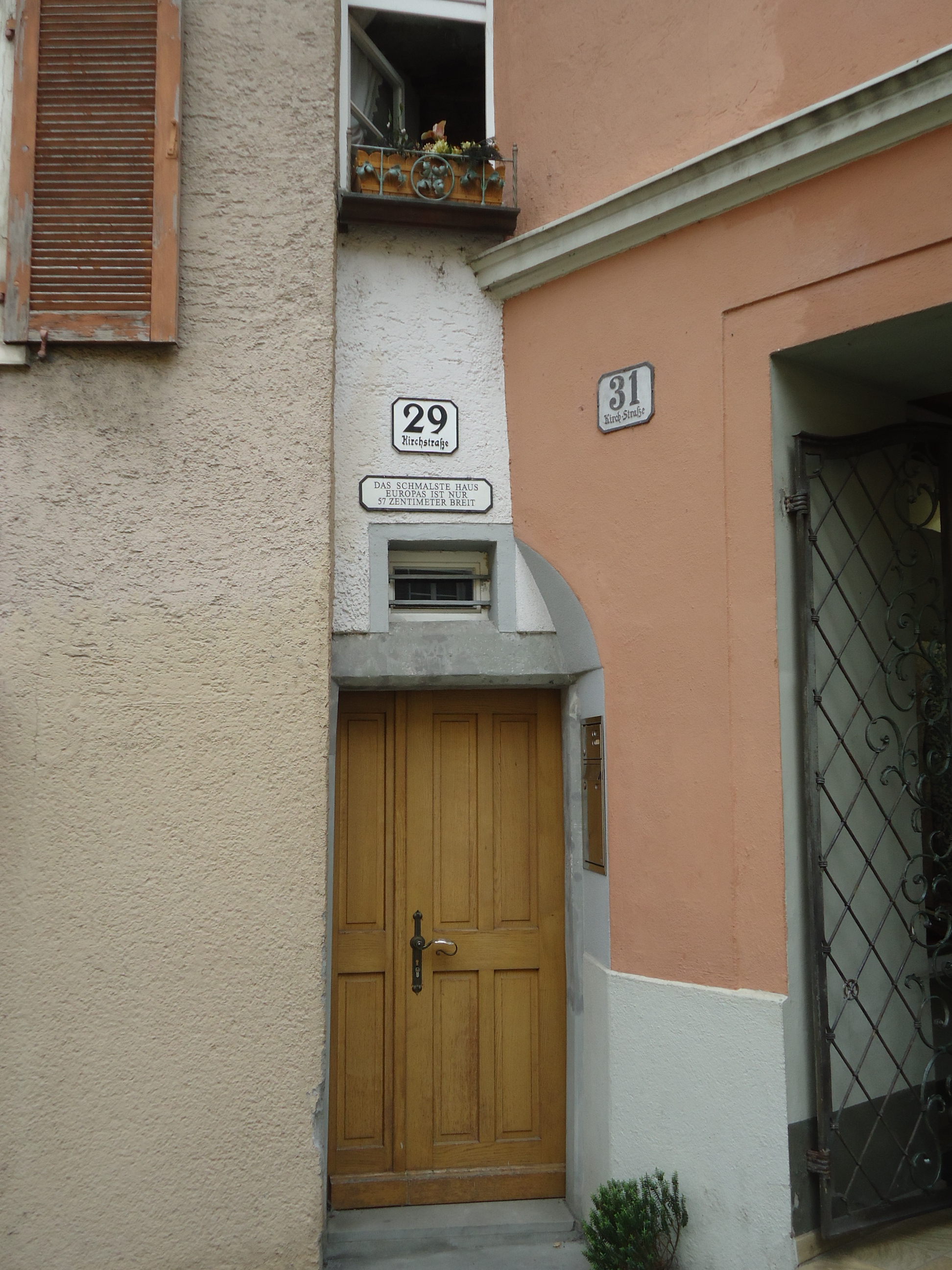
I took this photo here some years ago on a visit to the Austrian part of Lake Constance. No 29 claims the title of being the narrowest house in Europe, being all of 57 cm wide. Fact is, No 29 is a house. Opinion is, whether a house of that size is fit for human occupation in this day and age.
I like opinions. I have plenty of those myself. But one can't argues with facts. It should not have come as a surprise in the mid nineteen nineties that FMCG businesses and supermarkets were attempting to redefine their relationship with each other, based on a range of differing opinions on industry drivers and emerging technology solutions.
Anyone wanting to dive further into the fact versus opinion conundrum, might like to start with a very pertinent article on the topic on The Philosophers' Magazine website.
Fact-based Produce Category Management
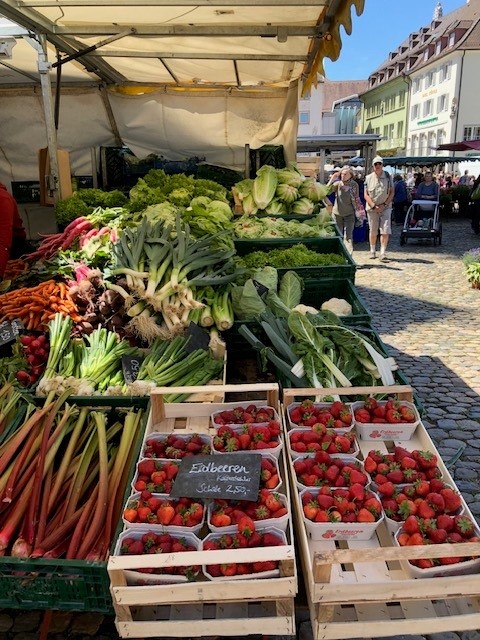
This photo shows the exact opposite of fact-based category management. Strawberries, rhubarb and spring onions share a display table with carrots, cauliflower, silverbeet cabbage and courgettes. Some of the produce in single layers, other items piled up high - just as one would expect to see at a Farmers Market.
A supermarket practising category management, on the other hand, can be typically be recognised by its produce department attempting to communicate a visual sense of order to customers, with every item in its place and a place for everything.
There will, of course, be seasonal variations, which has to be expected in the fresh produce category, but the core idea underpinning the produce department is that displays should be consumer focused rather than driven by produce staff preferences.
The typical drivers that appeal to consumers include preparation, consumption and convenience commonalities.
Tomatoes are therefore displayed within proximity of salad vegetables. Root crops, such as potatoes, kumara and onions are relatively shelf-stable and are typically boiled, baked or fried before consumption. It therefore makes sense to display them together. Bagged and ready-to-eat salads are not spread from one end of the department to the other, but are displayed as a block, and, where possible, close to the loose leaf lettuce section, maintaining a "fresh" connection.
By the time the produce has arrived on the display in the supermarket, the centrally based category managers have already accumulated a large amount of verifiable information about the crops, including the obvious one, such as :
- volume ordered and received;
- cost landed at the distribution centre;
- cost landed at the stores;
- retail margin applied to cost landed at stores on a product by produce basis;
- retail price calculated, and potentially smoothed, taking GST into account.
At this point, the category manager already knows more than the produce buyer operating at the auction ever knew.
- Auction buyers never ordered anything. They attempted to supply what the stores had ordered.
- There were no retailer operated distribution centres. Produce purchased at auction travelled directly to stores.
- Retail margins were added to the price paid at auction, with GST taken into account.
- The delivery cost of produce from auction to stores was a flat fee per load and charged directly to the stores operating expense account, without that sum ever being applied across the produce delivered and reflecting true cost of delivery.
These were the days before the bean counting fraternity had invented Activity Based Costing.
And That Was Just The Start
Through establishing direct relationships with grower and packers, retail category managers are able to access many more facts, including:
- when a crop has been planted;
- how a crop is being managed pre-harvest;
- the intricacies of determining harvest timing and operational execution
- post-harvest management and distribution.
All these processes a crop has to experience between paddock and the retailer distribution centres generate a high level of interest from category managers, as the information, data and facts generated during a crop's production/harvest/post-harvest cycles, assists a category manager to optimize the performance of the crop within the supply chain, ideally for mutual benefit.
Well, that's the theory anyway.
And yes, I will explain this slightly cynical five-word conclusion to this page in a separate posting.