- Home
- Fresh Produce Knowledge
- Horticulture in New Zealand - 75 Years on
Horticulture In New Zealand-75 Years On
Horticulture in New Zealand - 75 years on
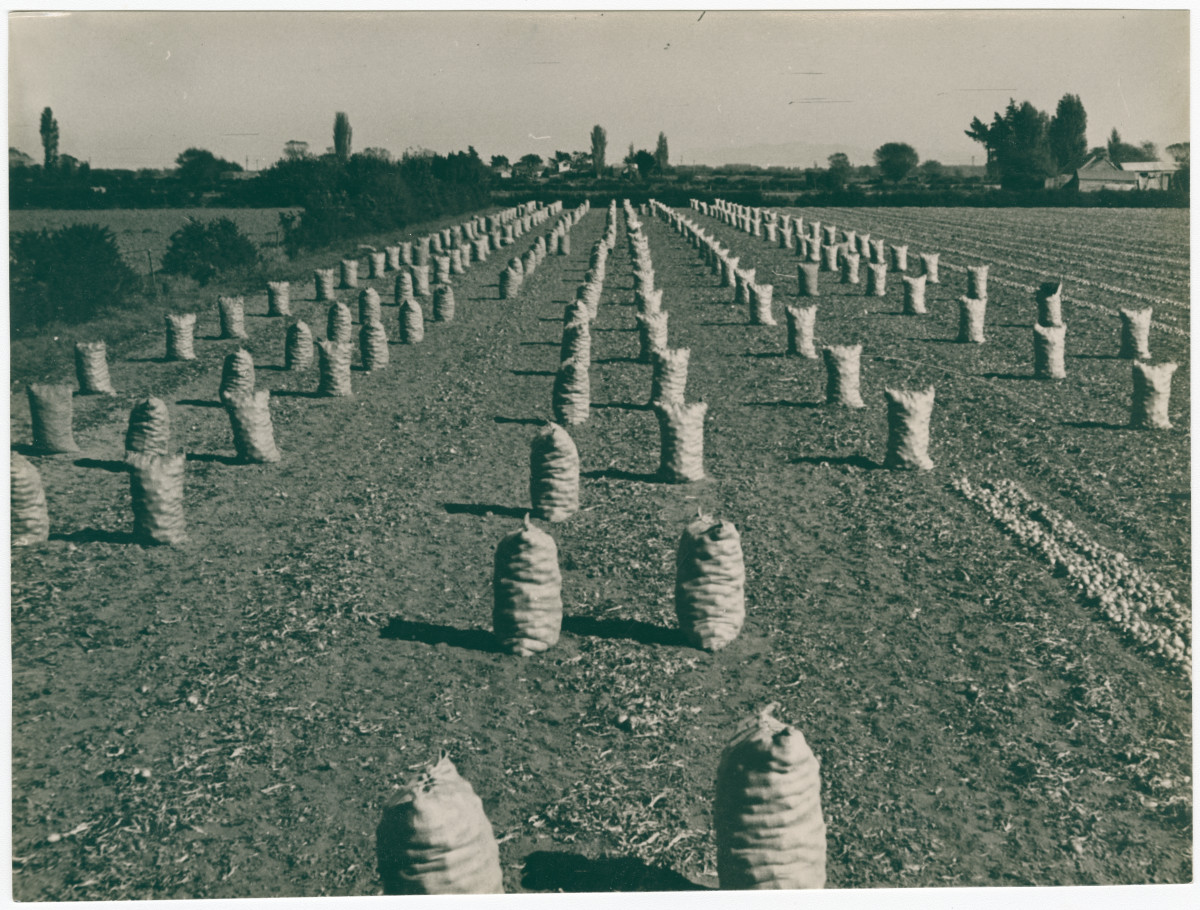
Horticulture in New Zealand - 75 years on, has its starting point in 1945, when a discharged British army major and bomb disposal expert by the name of John Pilkington (J.P.) Hudson arrived in Wellington, New Zealand, to take up a position with the then Department of Agriculture. Today, we call this government department the Ministry for Primary Industries.
J.P. Hudson spent three years in New Zealand. He returned to the United Kingdom in 1948. One of his specific tasks at the New Zealand Department of Agriculture was to work on the transportability of Actinidia chinensis fruit, then known to a limited audience as the Chinese gooseberry. Today, this fruit is known world-wide as kiwifruit.
Upon his return to the UK, J.P. Hudson took up an appointment as a lecturer in horticulture at Nottingham University. Professor J.P. Hudson CBE, MBE, GM, B.Sc., N.D.H. died in 2007, after a distinguished academic horticultural career at both Nottingham and Bristol Universities.
Legacy to New Zealand
In 1950, J.P. Hudson wrote an article with the deceptively simple title “Horticulture in New Zealand”. I found the article whilst searching for suitable references for an entirely different project, namely Fresh Facts 2025, New Zealand’s annual fresh fruit & vegetable Industry pocket data almanac.
I read J.P. Hudson’s article with rapidly growing interest, as I soon realized that I was holding the virtual equivalent of an old-fashioned time capsule in my hand, giving me a rare opportunity to gain deep insights into how Horticulture in New Zealand presented itself, a few years before my birth, to a then industry expert.
Hudson wrote his paper in a conversational style, pointing out that he was providing “personal impressions gained after spending three years on the staff of the New Zealand Department of Agriculture during which time there was ample opportunity of seeing a great variety of holdings, meeting many growers and getting to know practically everyone in the in the Dominion who was concerned in any way with horticultural education.” (Hudson, J.P. p.41).
Methodology
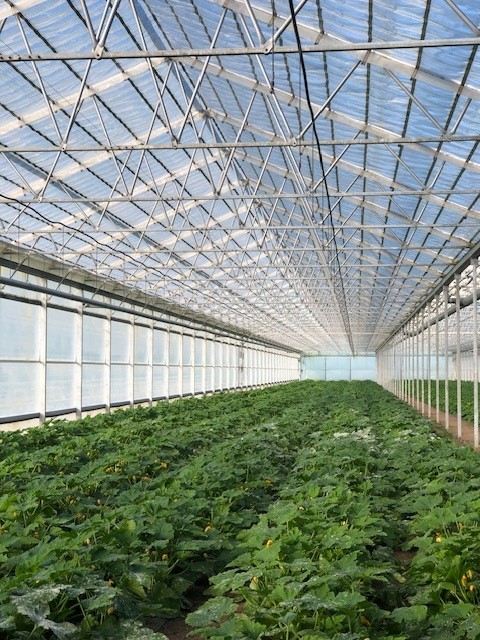
Hudson’s paper was structured into four main sections, these being the Environment (1), Commercial Horticulture (2), Home Gardening (3), and Horticultural Education (4). Three of these main sections contain several subsections, ranging from Climate and Countryside (1), Fruitgrowing, Market Gardening, Nursery & Glasshouse Work, Cut Flowers, Tobacco and Size of Holdings (2) to School Gardening, Home Gardeners, Professional Horticulturists, and Training for Advisory Service (4).
I have followed Hudson’s structure in my analysis of his paper presented here but have not necessarily commented in-depth on every aspect of the points he has made.
All text in this document displayed in Italics and quotation marks represents direct quotes from Hudson’s paper, shown with just the relevant page number(s).
I have added my own observations to the various sections as I am discussing Hudson’s paper. I am also providing some closing comments, looking at Horticulture in New Zealand from a strategic perspective and through a future focused lens.
Where to from here?
Horticulture in New Zealand - 75 years on, this webpage and my article with the same name were only made possible by the foresight and thought leadership exercised by J.P. Hudson seventy five years ago. Hudson left a marker, a stake in the ground, observations at a moment of time.
Third party markers about Hudson also exist. They are more numerous in the UK of course, but they exist in New Zealand as well. One example is Hudson being recognised on the Royal NZ Institute of Horticulture (RNZIH) website as a 1949 recipient of the Institute's Associate of Honour Award.
So, there are two documents in situ now, Hudson's 1950 assessment and my own 2025 analysis of the state of horticulture in Aotearoa New Zealand, based on Hudson's original structure.
How can this opportunity of two markers now being in place be further developed? I have been considering this question for several months now, and a few days ago, the penny finally dropped. My bookshelves are populated by numerous horticulture and produce industry publications, and I have over the years collected many papers published about the production, marketing and distribution of fruit & vegetables in our country.
The answer is that I am now at the beginning of a journey. A journey that will have me examine the seventy five years that exist between the two markers, identify the significant milestones that are situated between 1950 and 2025, in an attempt to analyse and report upon the strategic patchwork that has inevitably involved across our industry since Hudson put pen to paper in 1950.
Think of "Horticulture in New Zealand - 75 years on" as the gateway I will travel through, in order to analyse and document industry milestones that have occurred since.
"Why bother?", one may ask. Why bother, indeed? The answer is fairly obvious, at least to me.
History has the habit of repeating itself. Progress is driven by action. Taking action also increases the risk of making mistakes and experiencing failure. Actions taken and outcomes achieved deserve to be analysed and reported, to improve the chance of success from future actions. Action and learning must go hand in hand to achieve sustained success.
Fresh Produce Knowledge is a journey, not a destination.